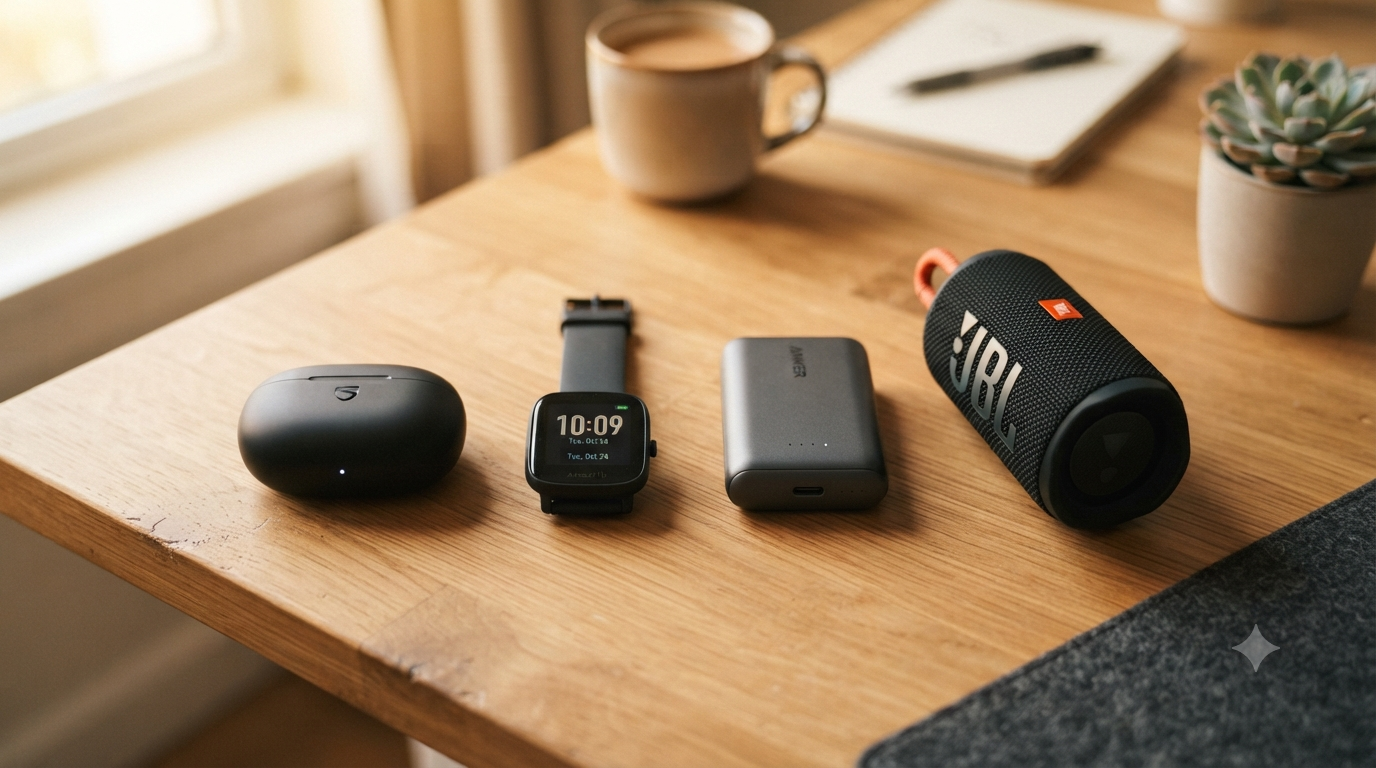
If you are searching for the best budget gadgets to buy in 2026, you probably do not need another random list of “cool” products. You need gadgets that make your day easier, survive regular use and do not leave you wondering why you spent ₹1,999 on something now sitting in a drawer.
This guide is built for Indian students, working professionals, commuters, and first-time gadget buyers aged 18 to 40. By the end, you will know which gadget categories are genuinely worth your money under ₹5,000, what to avoid and how to choose a product that fits your routine instead of a marketing poster.
The confusing part is that budget tech has improved a lot, but product names, fake discounts, and copied listings have made shopping harder. A ₹999 pair of earbuds can be enough for calls and music, while a ₹2,999 pair may still disappoint if its microphone is weak. The price tag alone tells you very little.
This tech site is for readers who want practical buying advice not hype. The best budget gadget is usually not the newest one. It is the one you use often enough that its cost feels small within a few weeks.
What Are Budget Gadgets and Why They Matter Right Now
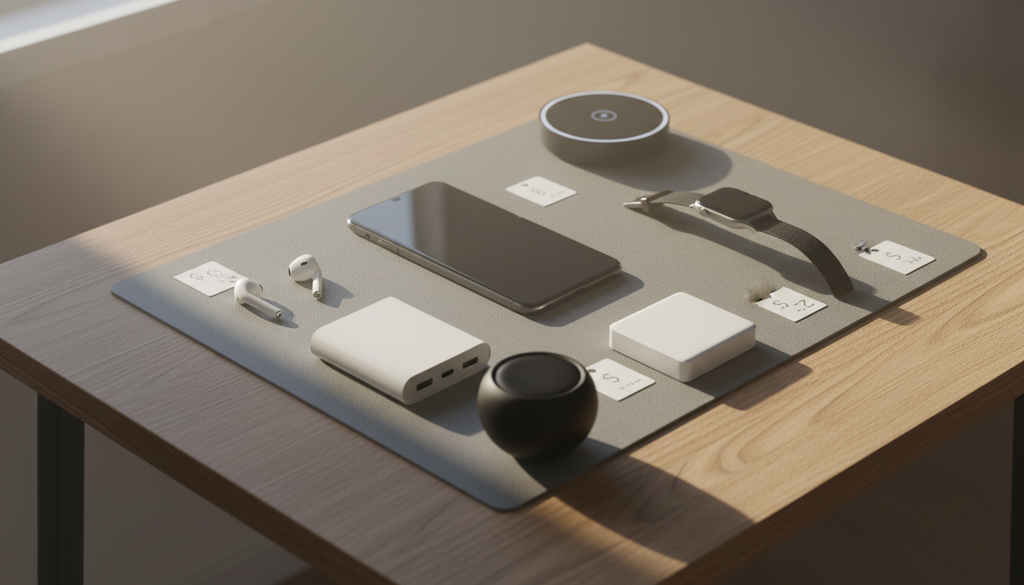
Budget gadgets are affordable technology products that solve a regular problem without asking you to pay premium brand prices. They include items such as wireless earbuds, fitness bands, power banks, smart plugs, compact keyboards, Bluetooth speakers and charging accessories.
The key word is “useful.” A small gadget is not a smart buy just because it looks modern, trends on Instagram, or arrives in premium looking packaging. A useful gadget saves time, prevents a daily irritation, improves comfort or helps you use the devices you already own more effectively.
In 2026, budget tech in India is more competitive than it used to be. The market now has strong choices from boAt, CMF, Redmi, Realme, Noise, Portronics, Ambrane, TP-Link Tapo, Logitech and several other brands. That competition has pushed features once found in expensive devices fast charging, Bluetooth multipoint support, active noise cancellation, energy monitoring, and long battery claims into lower price ranges.
For example, boAt currently sells the Airdopes 131 at ₹999 on its official store, while its higher-end Nirvana Ion ANC is listed around ₹1,999 during sale pricing. That does not mean the more expensive model is automatically right for you; it means buyers now have more room to match features with real needs.
A practical observation from regular gadget buying: the products people keep using are usually boring at first glance. A reliable power bank, a good charging cable, or a smart plug rarely gets as much attention as a smartwatch, but it can make a bigger difference to your daily routine.
Later, we will cover the one buying check that prevents most “I bought the wrong gadget” regret: calculating cost per use before you place the order.
Who This Is For and Who Should Skip It
This guide is for people who want useful technology without spending ₹10,000 or more on every accessory. It is especially relevant if you already have a phone or laptop and want accessories that make those devices more practical.
- College students and exam prep learners: A dependable power bank, wired or wireless audio device, USB desk lamp, or compact keyboard can improve study sessions and commutes. Students should prioritize battery life, durability, and warranty over premium design.
- Office workers and freelancers: If you spend hours on calls, type on a laptop or work from a shared room, a comfortable earbud set, webcam light, wireless mouse or laptop stand can reduce small daily frustrations. These products are useful because they improve a repeated task, not because they add another screen to your life.
- Daily commuters: Metro riders, bus commuters, and people who travel between college, office, and home benefit from a power bank, neckband or TWS earbuds, compact charger, and tracker-friendly bag accessories. Here, portability matters as much as specifications.
- People setting up a first smart home: Renters and families can start with low-risk items such as a smart plug or smart bulb. TP-Link’s Tapo smart plugs offer features such as scheduling, auto-off, device sharing, and, on supported models, energy monitoring.
- Gift buyers: Gadgets under ₹2,000 to ₹5,000 work well for birthdays, festivals and practical gifts. Still, choose based on the receiver’s routine. A fitness band is a poor gift for someone who dislikes wearables, and gaming earbuds are wasted on a person who only takes calls.
The most misunderstood rule: do not buy a gadget to fix a problem you do not have repeatedly.
You should skip this guide’s recommendations if you need professional grade audio, medical grade health monitoring, serious gaming hardware, camera equipment or a primary smartphone. Budget accessories are excellent for everyday convenience, but they are not magic substitutes for specialized devices.
If you are an Indian student, commuter, renter or young professional trying to spend carefully while making everyday tech more useful, this article is written for you.
How It Actually Works Complete Process
Buying a good budget gadget is less about finding the highest discount and more about following a simple filter. When you actually do this, you will find that half the products in your cart no longer make sense and that is a good outcome.
Step 1: Identify the repeated problem
Start with the moment in your day that annoys you most. Is your phone dead by evening? Do you struggle to hear calls on the road? Does your laptop setup hurt your neck? Do you forget to switch off appliances before leaving home?
Write the problem in one sentence. For example: “My phone battery drops below 15% during my two hour commute,” or “I need clear calls while working from a noisy room.” This prevents you from buying an attractive product that solves nothing important.
A gadget earns its place only when it fixes a problem that happens at least two or three times a week. That is the daily-use test.
Step 2: Set an all in budget
Do not use only the listed price. Include the likely extra cost of a compatible charger, cable, adapter, batteries, subscription or replacement accessory.
For example, a power bank may seem affordable until you realize it does not include a fast-charging cable or that your phone needs a Type-C to Lightning cable. A smart bulb may require a stable 2.4 GHz Wi-Fi connection, and some smart home setups become expensive when you add multiple rooms.
Set a final amount, such as ₹1,500, ₹2,500 or ₹5,000. Then leave about 10% of that budget for accessories or delivery charges if needed.
Step 3: Decide which feature is non negotiable
Every category has one feature that matters more than the rest. For earbuds, it may be microphone quality for calls. For power banks, it may be safe charging output and capacity. For a smartwatch or fitness band, it may be app reliability and display readability outdoors.
Do not get distracted by a product claiming 20 features when it fails at the one job you need it to do. For example, a budget smartwatch can show heart rate estimates and sleep data, but it should not be treated as a medical device. Buy it for activity reminders, notifications, timers and basic trend tracking not for health diagnosis.
Most guides get this wrong by comparing feature counts instead of real priorities.
Step 4: Check compatibility before looking at reviews
Check your phone’s charging port, charger wattage, Bluetooth version, operating system, Wi-Fi setup, and app requirements. This takes five minutes and can save you an unnecessary return.
For a smart plug, verify the appliance load rating and whether the plug supports the power level you plan to use. Avoid connecting high-load appliances unless the manufacturer clearly states that the model is designed for that purpose. For earbuds, make sure the companion app works on your Android or iPhone version if you care about equalizer settings, touch controls, or firmware updates.
In practice, this means reading the product page’s technical section not only the large marketing images.
Step 5: Read negative reviews in a useful way
Do not blindly trust either five-star or one-star ratings. Look for repeat complaints from verified buyers: weak mic quality, one earbud not charging, bad app pairing, battery decline, poor service response, or misleading size.
Then check whether the complaint matters for your use. A gamer may care about latency, while a commuter may care more about call quality and fit. One person’s deal breaker may not affect you at all.
Also look at reviews posted after a few weeks or months. Early reviews often describe unboxing excitement. Long term reviews reveal hinge quality, charging port wear, app bugs and battery durability.
Step 6: Buy from a traceable seller
Prefer the official brand store, a major authorized retailer or a well known marketplace listing that clearly shows the seller, return window, warranty, invoice and replacement policy. Keep a copy of the invoice. You may need it for warranty support.
A low price from an unknown seller is not always a deal. It can mean old stock, missing warranty coverage, refurbished goods presented as new, or a model with no service support near you.
Step 7: Test it during the return window
When your gadget arrives, test the core function first. Make calls in a noisy place with earbuds. Charge your phone with the power bank. Pair the smart plug with Wi-Fi and test schedules. Use a keyboard for a full work session.
What nobody warns you about here: many people wait until the return window is nearly over because they are “saving” the product for later. That is how small defects turn into permanent problems. Test it within the first two days.
Comparison Table Best Budget Gadget Types Side by Side
The right category depends on the problem you want to solve. The table below compares four budget gadget types that tend to deliver real daily value in India.
| Name/Option | Key Feature | Best For | Limitation | Verdict |
|---|---|---|---|---|
| TWS earbuds | Cable-free calls, music, and portability | Students, commuters, casual listening | Battery aging and mic quality vary widely | Buy if you listen or take calls most days |
| 10,000mAh power bank | Emergency charging away from a socket | Travel, college, long workdays | Adds weight; charging speed depends on phone and cable | One of the safest first gadget purchases |
| Smart plug | Scheduling, remote control, and possible energy monitoring | Renters, families, smart-home beginners | Needs compatible Wi-Fi and safe load handling | High value when used with lamps, chargers, or low-load devices |
| Fitness band | Steps, alarms, notifications, and basic activity trends | Walkers, beginners, people who dislike bulky watches | Health readings are not medical grade | Better than a cheap smartwatch for simple fitness tracking |
| Wireless keyboard or mouse | Better comfort and productivity | Laptop users, writers, remote workers | Needs desk space and batteries or charging | Best productivity upgrade under a modest budget |
For most readers, a power bank is the most practical purchase because it solves a problem that appears without warning. Earbuds are the better choice if you commute or make frequent calls. A smart plug is the surprising value pick: it can make a regular lamp, charger, or small appliance feel smarter without replacing the appliance itself.
Real Benefits With Numbers and Specifics
The biggest benefit of buying the right budget gadget is not that it makes life “high-tech.” It removes small breaks in your day.
A 10,000mAh power bank, for example, can usually recharge many modern phones roughly one to two times after normal conversion losses, depending on the phone battery size, cable, and charging speed. That can mean the difference between navigating home, making a payment, or being stuck with a dead phone during travel. Do not expect the full printed capacity to reach your phone; energy is lost during voltage conversion and heat.
TWS earbuds can turn a noisy commute into usable time for calls, lectures, podcasts and music. But their best value is not sound quality alone. They help you avoid holding a phone against your ear while walking, cooking, or working. boAt’s official store currently places its entry Airdopes 131 around ₹999, showing how low the entry price can be for basic cable-free listening.
A smart plug can also create value beyond convenience. Models such as TP-Link Tapo’s smart plugs can support scheduled switching, auto-off, shared controls,= and energy monitoring on selected versions. This makes them useful for lamps, chargers, routers or other compatible low-load devices that people often forget to turn off.
Fitness bands offer a different kind of benefit: visibility. When you do this, you will find that basic step counts, inactivity alerts, alarms, and sleep trends can make routines easier to notice. The number itself is not the goal. The useful part is seeing whether you moved less during exam weeks, long workdays, or travel.
One benefit many articles skip is decision fatigue reduction. A good gadget reduces the number of tiny choices you make. A smart plug handles a routine schedule. A power bank removes the daily battery anxiety. A keyboard lets you type comfortably without adjusting your posture every few minutes.
The real test is simple: if you use a product at least 100 times in a year, a ₹1,500 gadget costs about ₹15 per use. That is often better value than a ₹700 novelty item used twice.
Beginner Mistakes Most People Make and the Fix
Buying the biggest discount instead of the best fit
A 70% discount looks tempting, especially during festival sales. The problem is that the original price may be inflated, or the product may simply be old stock. Compare the final price, warranty, feature set, and recent reviews instead of trusting the discount badge.
Treating battery claims as real life battery life
Brands often state battery figures under controlled test conditions. A pair of earbuds rated for 40 hours may last less when you use high volume, frequent calls, low-latency mode, or noise cancellation. Read the claim as a maximum, then expect less in regular use.
The fix is to choose a product with more battery than you need, not one that barely meets your requirement.
Ignoring microphone quality in earbuds
Many buyers compare driver size, bass mode and playback hours, then discover that callers cannot hear them clearly. This happens because music performance is easier to market than microphone performance.
Watch call-test videos and read reviews that mention outdoor calls, fan noise, traffic, and voice clarity. If calls matter more than music, prioritize a known reliable mic over extra bass.
Buying a cheap smartwatch for health diagnosis
This mistake is more common than people admit. A low-cost watch may show heart rate, SpO2, sleep, or stress indicators, but those numbers can be affected by movement, fit, skin contact, and software interpretation.
Use wearable data as a personal trend, not medical advice. If you have symptoms or a health concern, speak with a qualified clinician rather than relying on a watch reading.
Forgetting service and replacement support
A cheap gadget becomes expensive when one cable, ear tip, charging case, or strap fails and replacements do not exist. This is especially relevant for lesser-known TWS brands and low-cost wearables.
Before buying, check whether the brand has a clear warranty page, service process and local support. Buying from an official or traceable seller matters just as much as the product specification.
Ordering without checking the return policy
This is the mistake you may be making right now if you shop only by price. Electronics can arrive with pairing issues, damaged ports, or a fit problem that is obvious only after use.
Read whether the platform offers a return, replacement or only a service center route. Then test the product as soon as it arrives rather than keeping it packed for a special occasion.
Expert Tips That Actually Work
Buy last year’s reliable model when possible
The newest model is not always the best budget buy. Older products often receive price drops after a new launch, while their accessories, reviews, and known issues are easier to evaluate. A proven model with a stable price is usually safer than a just-launched product with very few real world reviews.
Spend more on the part that touches your body
For earbuds, that means fit and ear tips. For keyboards, it means key feel and wrist comfort. For fitness bands, it means strap comfort and screen visibility.
A feature packed product that feels uncomfortable will stay unused. Comfort is not a luxury feature; it determines whether the gadget survives the first month.
Use a separate budget for charging gear
A low-quality cable can make a good power bank feel slow or unreliable. If you buy a charging device, check the cable, adapter and port type at the same time.
Choose branded cables with the correct connector and power rating. Avoid extremely thin, unbranded cables that heat up, loosen quickly or fail after a few weeks.
For earbuds, test calls before music
Most people do the opposite because music sounds more impressive in the first five minutes. Make a call near a fan, by a window or outdoors. Record a voice note. Ask the other person whether your voice sounds clear.
That small test tells you more than a product’s “13 mm driver” label.
Choose a fitness band over a cheap smartwatch if you want simplicity
A fitness band usually has fewer features but may be lighter, less distracting and easier to charge. It is often better for step tracking, alarms, basic notifications, and sleep trends.
Xiaomi’s past smart band models have emphasized long battery life and activity tracking; for instance, Xiaomi listed the Redmi Smart Band Pro with up to 14 days of typical battery life in its specifications, though actual use varies.
Use smart plugs for routines, not every appliance
A smart plug works best when it automates a repeat action. Set a study lamp to turn off at bedtime, limit a charging routine, or schedule a compatible device before you reach home.
The surprising tip: do not begin your smart home journey with a voice assistant. Start with one device and one schedule. If that routine proves useful for two weeks then expand.
Check app ratings and permission requests
A gadget may work physically but become frustrating because its app is unstable, full of ads or asks for access it does not need. Review the app listing before purchase.
For a simple device such as earbuds or a fitness band, be cautious if the app demands unrelated permissions. You can usually deny non essential permissions but a bad app experience can still reduce the gadget’s value.
Calculate cost per use, not price alone
Before buying, ask: “Will I use this 100 times?” If yes, divide the price by 100. A ₹2,000 product used daily for a year is far better value than a ₹500 item that becomes clutter after one weekend.
This one check stops impulse buying better than any product comparison video.
Advanced Insights What Nobody Else Tells You
The best gadget is often an accessory, not a new device
People usually start by considering a smartwatch, speaker, or earbuds. Yet small accessories often create more lasting value: a good cable, a compact charger, a laptop stand, a reliable mouse, or a smart plug.
Why? Accessories improve a device you already use every day. You do not have to build a new habit around them. They fit into an existing routine, which gives them a much higher chance of being used.
Sale pricing can hide weak long term value
A product that drops from ₹4,999 to ₹1,499 may look irresistible. But a large discount does not tell you whether the company will provide firmware updates, replacement accessories, or warranty support.
Buy based on current value, not the crossed out price. A ₹1,800 product with a working service network is often a better deal than a ₹999 unknown-brand alternative.
Battery products need a different buying mindset
Earbuds, smartwatches and power banks all depend on rechargeable batteries. Over time, every lithium ion battery loses capacity. You cannot avoid that completely.
The practical lesson is to buy from a brand with a warranty and not overspend on a device you expect to keep for many years. Also avoid storing power banks or earbuds for months without charging them. Regular, sensible use is better than treating them like collectibles.
“Smart” features matter only when they remove a step
A smart plug that turns off a lamp automatically is useful. A smart device that needs three apps, repeated pairing, and constant troubleshooting is not.
When you actually try smart-home products, you will find that simple automation wins. The most successful setup is often invisible: it works quietly and saves you from remembering something.
Frequently Asked Questions
What are the best budget gadgets to buy in India in 2026?
The best budget gadgets are ones that solve a repeated daily problem. For most people, that includes a 10,000mAh power bank, TWS earbuds or a neckband, a smart plug, a fitness band, and a wireless mouse or keyboard. Choose only one or two based on your routine instead of buying several items during a sale. A useful gadget should still feel valuable after a month of normal use.
Which gadgets are useful under ₹2,000 in India?
Useful options under ₹2,000 include entry-level TWS earbuds, wired earphones, power banks during sales, smart bulbs, basic fitness bands, wireless mice, charging cables and small Bluetooth speakers. boAt’s official store, for example, lists the Airdopes 131 at ₹999 and Nirvana Ion ANC near ₹1,999 during sale pricing. Check the current price because online pricing changes often. Also verify warranty and seller details before ordering.
Are cheap TWS earbuds worth buying?
Cheap TWS earbuds are worth buying if you need casual music, basic calls and a cable free option for commuting or workouts. They are not ideal if you need professional call quality, powerful noise cancellation or highly accurate audio. Focus on fit, microphone reviews, charging case quality and warranty rather than only battery claims. If you make many calls outdoors, a neckband may still be a safer pick because it is harder to lose and often offers more consistent battery life.
Should I buy a smartwatch or a fitness band?
Buy a fitness band if you want step tracking, alarms, activity reminders, basic notifications, and a lightweight device with longer battery life. Buy a smartwatch if you want a larger screen, calling features, more watch faces, and stronger notification handling. For most beginners, a fitness band is less distracting and gives better value. Do not buy either device for medical diagnosis, even if it displays health-related readings.
Which smart home gadget should I buy first?
A smart plug is usually the best first smart home gadget because it works with devices you already own. It can help automate a compatible lamp, charger, router, or small appliance through schedules and remote control. TP-Link’s Tapo smart plugs include options with auto-off, device sharing, and energy monitoring features on supported models. Always check the product’s load rating and follow the manufacturer’s safety guidance.
What should students buy first: earbuds or a power bank?
Students who spend long hours outside home, attend classes, use QR payments, or travel should buy a power bank first. A dead phone can disrupt payments, navigation, communication and study access. Earbuds should come first only if you regularly attend online classes, commute with audio or take frequent calls. If your budget allows one purchase, choose the product that fixes the bigger weekly problem.
How can I avoid fake or low quality gadgets online?
Buy from official brand stores, authorized sellers, or major marketplace listings with clear invoices and return policies. Read recent negative reviews for recurring problems instead of trusting only the average rating. Avoid listings with vague specifications, copied photos no warranty details or prices that seem unrealistically low. Once the product arrives, test its core function during the return window.
Are smart plugs safe to use in Indian homes?
Smart plugs can be safe when you use a certified product correctly and stay within its stated load rating. They are best for compatible low load devices such as lamps, chargers and certain small appliances. Do not connect high power appliances unless the product documentation clearly supports that use. If you are unsure about your home wiring or appliance load, ask a qualified electrician.
Quick Summary Take This Away
The best budget gadgets to buy in India in 2026 are not necessarily the products with the longest feature list. They are the ones that solve a problem you face every week. A power bank is often the strongest first buy because it protects you from a dead phone during travel, classes, payments and work. TWS earbuds are valuable for commuters and people who take regular calls but microphone quality and fit matter more than flashy bass modes.
If you want to start with smart-home tech, choose a smart plug before buying several devices at once. It can automate a simple routine and show whether smart home convenience actually fits your life. A fitness band is usually a better first wearable than a cheap smartwatch if your goal is basic activity tracking, reminders and long battery life.
The smarter way to shop is to identify one repeated problem, set a final budget, check compatibility, study negative reviews, and test the device immediately after delivery. Ignore inflated discounts and do not assume a high feature count means high value.
Your next step is simple: write down the one tech problem that bothers you most this week, then buy the gadget category that fixes that problem not the one that merely looks exciting.
Final Thoughts
A useful budget gadget does not need to feel premium. It needs to become part of your routine without demanding attention, extra spending or constant troubleshooting.
Remember three things before you buy. First, choose a product that solves a recurring problem. Second, verify compatibility, warranty and return terms before you pay. Third, judge value by how often you will use the gadget, not by how dramatic the discount looks.
For most people, starting small is the right move. Buy one practical item, use it for a few weeks, and learn what actually improves your day. That approach saves money, reduces clutter and helps you build a tech setup that works for your real life.
You do not need every new gadget you just need the next one to be genuinely useful.


1 thought on “Best Budget Gadgets to Buy in India in 2026”